
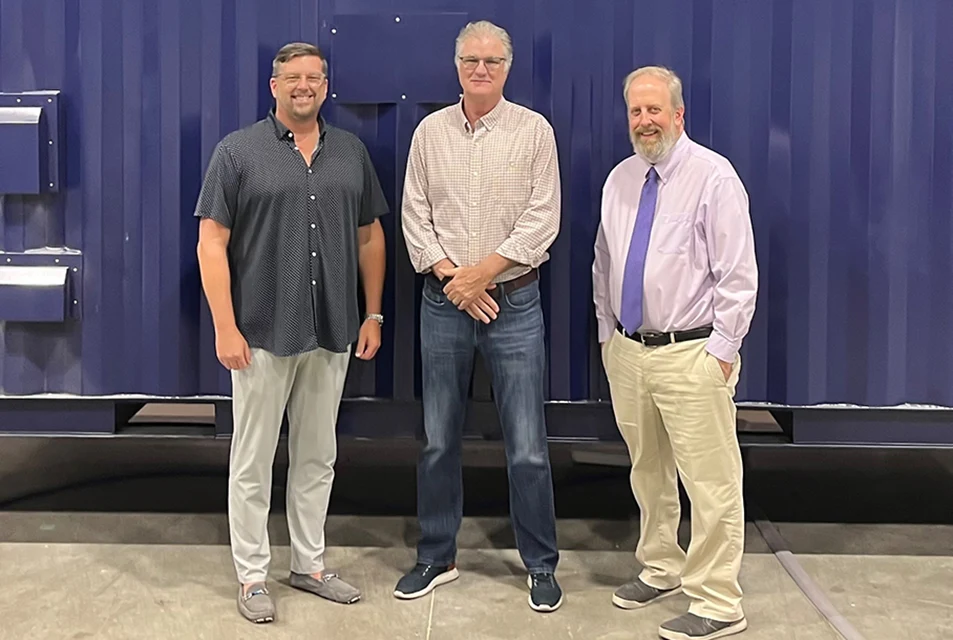
Q&A with Michael Slattery, Interim Executive Director of the Ralph Lowe Energy Institute
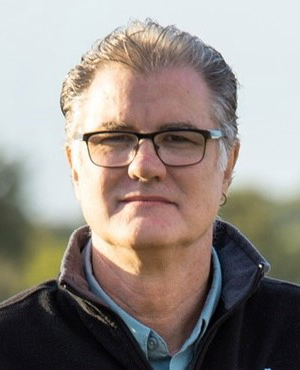
In his 26 years at TCU, Michael Slattery has served as a professor, department chair and director of the Institute for Environmental Studies, and he was pivotal in a $3.2 million grant presented in 2008 to the university from NextEra Energy Resources. where he was the lead scientist on “Integrating Wind Energy into our Ecological Communities.”
Slattery answered a few questions to provide insights on the TCU Neeley Ralph Low Energy Institute’s ongoing joint research project with the U.S. Department of Defense, the role of the institute in TCU’s goals and his giraffe-roping abilities.
Students are back in the classroom and you have officially started at the helm of the Ralph Lowe Energy Institute. What are you excited for this upcoming year?
Well, it is always great to be back on campus and feel the energy from the student body. I think what excites me most, besides the new challenge of leading the institute, is the positive momentum building around our strategic plan, as well as imagining what’s possible as we raise TCU’s reputation through elevated research and scholarship. It is so refreshing to be in a position to innovate in terms of our programs and people. There is just a different feel to the campus at the moment, and I think that is really due to our president’s focus on innovation.
You are a big contributor to the RLEI’s joint research project with the U.S. Department
of Defense, the Pacific Island Energy Initiative. What are your key takeaways? And
what’s next?
I am very proud of the work we did over the last year to position the institute and
the institution as the lead on this strategic collaboration with the Department of
Defense for the Pacific Island Energy Initiative. My first take away is that we have
real expertise on campus that cuts across all aspects of energy. So, it was a team
effort, particularly among the RLEI Faculty Fellows, to develop and then present to
the Department of Defense our integrated energy solution - a solution focused on helping
these Pacific Island Countries and Territories (PICTs) become energy independent as
well as reach their COP28 goals. My second takeaway is that one of TCU‘s great strengths
is that we are nimble, and we were able to move very quickly in terms of integrating
the academy, industry, business leaders, and government entities in developing this
integrated energy solution. Finally, this project will be a key component of building
our research ecosystem around energy and natural resources. In terms of next steps,
we have a lot of big possibilities upcoming.
We are seeing a big correlation between energy security and national security. What
role can energy play in geopolitics?
I think the link between energy security and national security is profound. It influences
a nation’s stability and its economic performance, among other things. For example,
in the Pacific, many of these nations are dependent on external sources of energy,
especially imported diesel, and this can create vulnerabilities in each countries’
national security. Disruptions in the supply chain, whether due to geopolitical tensions,
conflicts, or natural disasters which, in the case of a country like Tonga that we
visited, are especially acute and severely impact local economies. Simply put, energy
security underpins stability which is a cornerstone of national security.
This is not your first significant research project at TCU. What is your strategy
to research opportunities at TCU?
My focus is singularly on collaborative, interdisciplinary research projects. I think
that is where our strength lies. If we are to establish TCU as a leader in energy
research and scholarship, I believe our initiatives should be focused on building
a robust research ecosystem that fosters innovation and creates impactful, global
partnerships. I will be looking to help create specialized research teams focused
on critical areas of energy research, such as our renewable project in the Pacific
islands. We need to form strategic alliances with leading universities, other research
institutions, industry partners, and governmental organizations, again, focused on
collaborative research projects. I think this strategy aligns well with TCU‘s developing
focus on innovation.
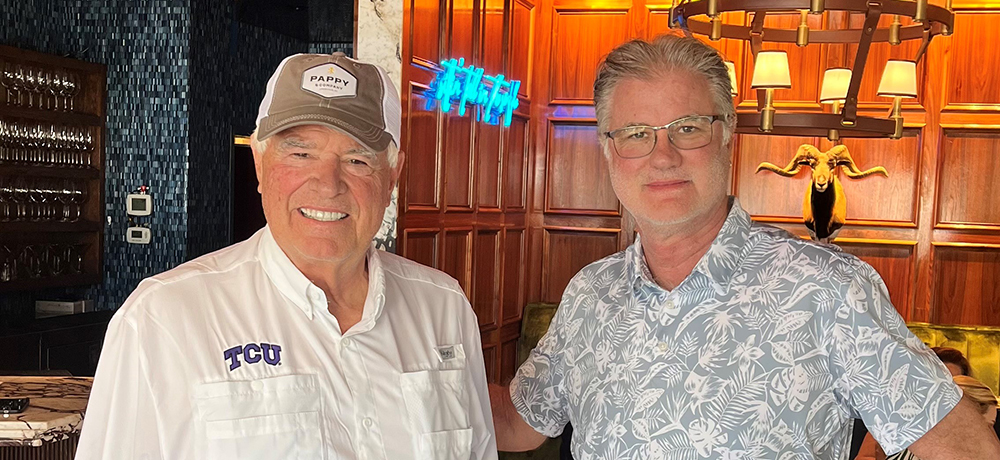
You originally began working with the institute as a RLEI Faculty Fellow, a cross-campus,
interdisciplinary group of TCU faculty with energy focus who help the institute bring
innovative and collaborative solutions to the big energy questions of the day. Why
do you think these types of collaborative partnerships are important right now?
The great challenges of the 21st century, of which energy is one, require a variety
of perspectives and expertise. We need to have interdisciplinary, collaborative initiatives
that integrate, for example, engineering, economics, policy, environmental science,
social sciences… the list is long! I know that every research project that I have
ever worked on has always produced better outcomes when there has been collaboration
rather than doing research within individual silos.
What are your biggest goals as interim executive director of the RLEI?
I have three goals really. First, we’d like to find an outstanding leader to be the
permanent executive director of the Institute, especially someone who can interface
between the academy and industry. Second, I want to ensure that the Pacific Island
project is a success, and that we can leverage that success to further collaborations
with entities like the Department of Defense. And third, we will continue to build
the endowment that will ensure long-term stability and excellence in our people in
programs.
The world of energy and what we might call energy transition is changing almost daily.
What innovations or story lines are most intriguing to you?
This is a difficult one to answer, because in my mind we have always been in an energy
transition, whether it be from coal to natural gas or carbon-based technologies to
renewable sources of energy. I am not an engineer, so I cannot speak specifically
to technological innovation, but I do think what is exciting is an acknowledgment
that providing accessible, affordable, and acceptable energy, and in our case in the
Pacific, electricity, is the fundamental underpinning of economic development.
When you are not teaching, doing research and running the energy institute, what do
you like to do?
I like to play golf, although I haven’t had much time to do that lately and I like
to travel, especially with my wife who is a geographer and a very curious human being.
Oh, and if I have the time, spending time with my Cavalier King Charles Spaniel, named
Billie Kensington.
You recently led another TCU Student trip to South Africa to continue your work with
rhino conservation. What was the best experience this time around?
Well, it is always wonderful to see conservation through the eyes of the students,
but in terms of a memorable experience, it would have to be helping in the relocation
of two giraffes! It may sound straightforward, but try and picture roping two giraffes,
getting them prepped for transport, which includes putting on blindfolds and earplugs
and administering vitamins and antibiotics, and then walking them into a trailer.
I know everyone says things are bigger and better in Texas, but roping a giraffe is
a little different to roping a cow.